 Back to Blog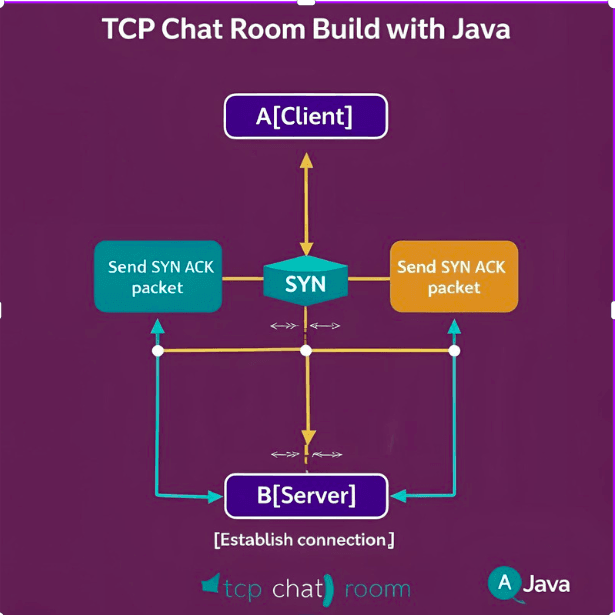
When I set out to build a TCP chat room in Java, I thought it would be a straightforward networking exercise. What I didn't expect was how much I'd learn about multithreading, race conditions, and the importance of proper resource management.
The Architecture
The chat room uses a classic client-server architecture. The server listens on a TCP socket and spawns a new thread for each connected client. Each client thread reads messages from its socket and broadcasts them to all other connected clients. Simple in concept, surprisingly complex in execution.
The Threading Challenge
The first version worked fine with 2-3 clients. But when I tested with 10+ simultaneous connections, messages started arriving out of order, some clients would freeze, and occasionally the server would crash with a ConcurrentModificationException. The client list was being modified by one thread while another was iterating over it to broadcast messages.
The Fix: Thread-Safe Collections
The solution involved switching from ArrayList to CopyOnWriteArrayList for the client list, adding synchronized blocks around critical sections, and implementing proper cleanup when clients disconnected. I also learned about ExecutorService for managing thread pools instead of creating raw threads — a pattern that scales much better.
- Use thread-safe collections (ConcurrentHashMap, CopyOnWriteArrayList) for shared state
- Always handle client disconnection gracefully — close sockets in finally blocks
- ExecutorService > raw Thread creation for production code
- Test with realistic concurrency levels, not just 2-3 clients
Why This Matters Beyond Chat Rooms
Understanding multithreading is essential for backend development. Whether you're building a web server, processing background jobs, or handling database connections — concurrency is everywhere. This project gave me practical experience that I now apply to every backend system I build.